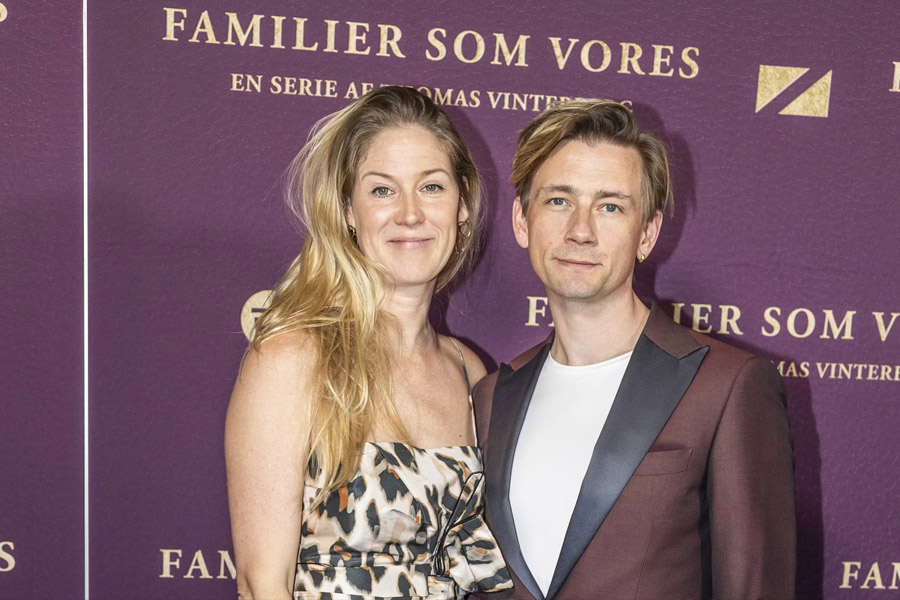
Basic Information
| Field | Detail |
|---|---|
| Full name (as commonly referenced) | Line Bjørn Daugbjerg Christensen |
| Approximate birth year | c. 1978 |
| Primary base | Aarhus, Denmark (Højbjerg suburb) |
| Primary role | CEO & Distributor, Øst for Paradis |
| Company | Øst for Paradis — four-screen arthouse cinema & distribution arm |
| Took over leadership | 2007 (age ~29) |
| Distribution output (approx.) | ~15 arthouse titles per year |
| Notable admissions | Quiet Chaos — ~15,000 admissions; Winky’s Horse — ~14,500 admissions across school runs |
| Spouse | Esben Smed (actor) |
| Children | Son: Sirius; Daughter: Iris |
| Sister / co-manager | Ditte Daugbjerg Christensen |
| Parents | Father: Ole Bjørn Christensen (founder/director of Øst for Paradis); Mother: Nete Daugbjerg |
Family at the Center: People, Roles, Numbers
| Family Member | Relationship | Role / Note |
|---|---|---|
| Ole Bjørn Christensen | Father | Founder and long-time director of Øst for Paradis; passed leadership to Line in 2007 after nearly 30 years |
| Nete Daugbjerg | Mother | School teacher; formative influence on a childhood framed by learning and culture |
| Ditte Daugbjerg Christensen | Sister | Co-managing director of Øst for Paradis; visible collaborator in programming and presentation |
| Esben Smed | Spouse | Actor; public-facing figure whose interviews occasionally highlight family anecdotes |
| Sirius | Son | Private; limited public detail |
| Iris | Daughter | Private; limited public detail |
A Cinematic Inheritance and a Quiet Apprenticeship
Line Daugbjerg Christensen’s professional life reads like a family ledger written in film reels. Born around 1978 and raised in Aarhus, she grew up with cinematic frames at the edge of her daily view: her father, Ole Bjørn Christensen, founded Øst for Paradis and ran it for almost three decades, turning a single-screen dream into a four-screen hub that opened with East of Eden. The cinema’s name itself is a cultural compass pointing outward — east of the familiar, into new cinematic terrain.
Her early years were practical and hands-on. Formal study in film production blended with on-set experience. Credits and work as a production assistant appear regularly in the early 2000s: This Charming Man (2002), Tripling / 2 ryk og en aflevering (2005), Murk (2005), and Aching Hearts (2009). Those years were a slow accretion of skills — logistics, scheduling, the small, unglamorous tasks that keep a production moving. It was fieldwork that would later inform management: understanding the life cycle of a film from set to screen.
In 2007, when she was about 29, Line stepped into the director’s seat at Øst for Paradis. That handover was not a rupture but a generational pivot: the intimate family business shifted from founder to daughter, preserving legacy while asking for modernization.
Running Øst for Paradis: Numbers, Strategy, and the Arthouse Ethos
Under Line’s stewardship, Øst for Paradis has maintained a dual operation: a four-screen cinema serving a regional audience and a small-scale distribution arm importing and advocating for arthouse titles. The distribution slate averages around 15 titles per year — a curated flow rather than mass-market output. The ambition is cultural influence; the metric is sustained audience engagement.
Concrete numbers illuminate the scale and the constraints. A notable success was roughly 15,000 admissions for Quiet Chaos during a strong run. Children’s programming — often a financial backbone for arthouse cinemas via school screenings and long-tail family runs — showed strength too: Winky’s Horse recorded approximately 14,500 admissions across multiple years of school screenings. Those figures reveal a pattern: selective hits that sustain the program, interleaved with many smaller runs that require subsidy, partnerships, and patient curation.
Modernization has been operational and tactical. Line and her team introduced online booking and mailing lists, themed events such as food-and-film nights, and local business collaborations. These measures are practical responses to a market that rewards convenience and experience. The cinema’s work in European networks — Europa Cinemas and Europa Distribution among them — positions it for co-funding and co-programming, a necessity when box-office receipts alone rarely cover the full cost of programming quality international cinema.
Financial specifics are absent from public records, which is telling in itself. The arthouse model here resembles a craft workshop more than an industrial concern: small batches, artisanal curation, cultural value often trumping immediate profit. Grants, MEDIA Programme support, and partnerships form part of the economic scaffolding.
Private Life in Public Lines
Line’s personal life is deliberately compact and low-key. She met actor Esben Smed in 2002 during on-set work; the initial meeting left awkward impressions on both sides, only to be followed years later by reconnection at a premiere and the start of a long-term relationship. The couple live in Højbjerg, a suburb of Aarhus, with two children, Sirius and Iris. Marriage and parenthood are treated as steady facts in the public record rather than spectacle.
Esben Smed’s interviews occasionally lift the curtain on domestic anecdotes — small human moments rather than headline-making revelations. Those interviews bring attention to Line by proxy, but the family keeps personal details to a minimum. Social media exists but is modest: a curated Instagram presence mixing professional promotion and glimpses of family and home life (dozens of posts; hundreds, not thousands, of followers).
Sibling Collaboration: Ditte and the Shared Work of Cinema
The “sisters in paradise” story is concrete. Ditte Daugbjerg Christensen serves as co-managing director and public presenter on behalf of the cinema. On-screen presentations, festival appearances, and programming decisions are often joint efforts. This sibling partnership frames Øst for Paradis as a family-run cultural project — governance shared, burdens divided, taste refined through consensus. It is a corporate structure with domestic undertones.
Public Presence, Media Moments, and the Quiet of Cultural Work
Media coverage of Line is selective: profiles tied to the cinema, interviews around programming, occasional lifestyle pieces showing the family home. The timeline of public mentions includes industry commentary (for example, discussions about subscription models for arthouse cinemas), a handful of YouTube presentations (2012 and later clips), and lifestyle features that highlight renovations and home design. The pattern is consistent: Line appears where cinema demands her presence; she remains absent where celebrity might chase her otherwise.
Her leadership at Øst for Paradis is less about spectacle and more about stewardship. She runs a cultural engine whose combustion is slow but steady. The cinema distributes about 15 films a year; it can generate five-figure admissions for hits; it relies on European networks and local partnerships. The picture that emerges is of a custodian — someone who tends a fragile cultural ecosystem with pragmatic care and a quiet appetite for sustaining the next generation’s access to films that live outside multiplex formulas.
Timeline Snapshot
| Year | Event / Note |
|---|---|
| ~1978 | Line’s estimated birth year |
| 2002 | Early production work; met Esben Smed on set |
| 2005 | Production credits: Tripling, Murk |
| 2007 | Assumed leadership at Øst for Paradis (age ~29) |
| 2009 | Production work on Aching Hearts; reconnected with Esben |
| 2010 | Public interviews about distribution strategy |
| 2012 | Video appearance as director of Øst for Paradis |
| 2013 | Profile pieces on sisters running the cinema |
| 2019 | Sister Ditte presents films in promotional clips |
| 2020–2024 | Media mentions focus on family life and industry commentary; modest social media activity |
The narrative is less a spotlight than a steady lamplight, illuminating an arthouse institution and the family that keeps it warm.